
The Weekly Anthropocene
As seen in The Weekly Anthropocene
October 14, 2025

I would say that it’s very heartening to see global leaders who are passionate about solar and sustainability! But you quite often see a new leader come in the country who wants to change the way that electricity is built, or change the economics of the country.
Lassor Feasley is the CEO and co-founder of Renewables.org, an innovative new nonprofit microfinance platform that allows investors to support solar development in the Global South with zero-interest philanthropic loans.
In the interview below, this writer’s questions and comments are in bold, Mr. Feasley’s words are in regular text, and extra clarification (links, etc) added after the interview are in bold italics or footnotes.
Climate Action Now is actively working on partnering with Renewables.org.
I am super excited about Renewables.org, and I would love to hear from you the story of how it came to be! What is it? What’s the model? How did you get involved? And why is it incredibly awesome?
Thank you!
Yeah, so Renewables.org is the online Global South solar investing nonprofit. Anyone can invest as little as $25 in Global South solar and get repaid as they generate and sell clean electricity to the grid. When you invest $25 in Renewables.org, we lend that money to Global South solar developers. And those solar developers go out and fund and build new commercial solar projects.
A commercial solar project means one or two megawatts, usually. Think the size of a car dealership, a mid-sized warehouse, a factory. These projects are structured so that the power purchaser, that factory or warehouse or school, is contracted to purchase all the electricity that is produced from that commercial solar project. That money gets paid to the developer who then repays us, and we make you whole again on Renewables.org.
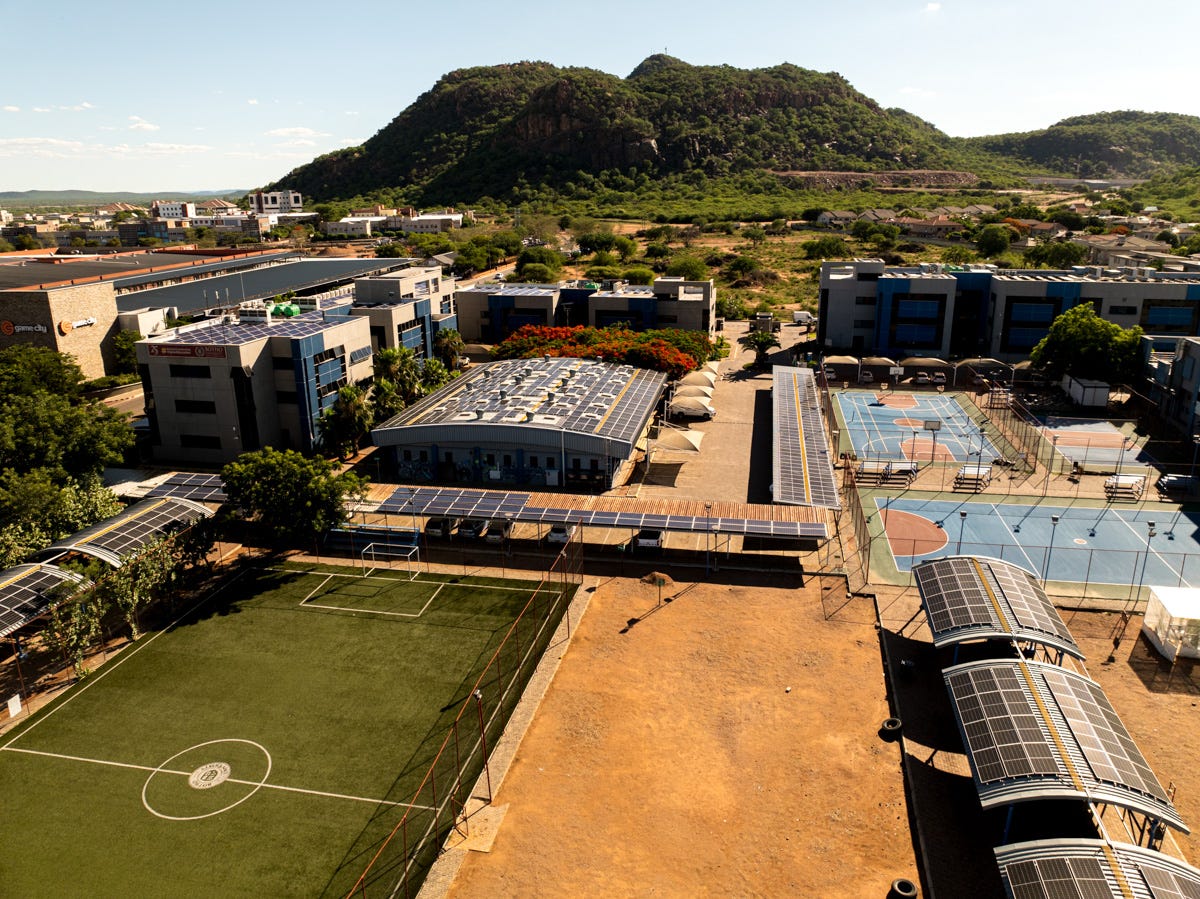
A Renewables.org example project: solar power at a university in Gaborone, Botswana.
Our investors don’t earn an interest rate. It’s a 0% philanthropic loan. You get repaid over five years, making you whole again. You don’t make an interest rate, but you create five times the carbon impact of U.S. solar investing. More carbon impact than any other climate investment we’ve analyzed!
That’s because the cost of construction is much lower, while the carbon intensity of the power grid where these solar facilities are being built is much higher. And they tend to get a lot more sunshine on average, almost 20% more sunny hours each year than an American solar facility.
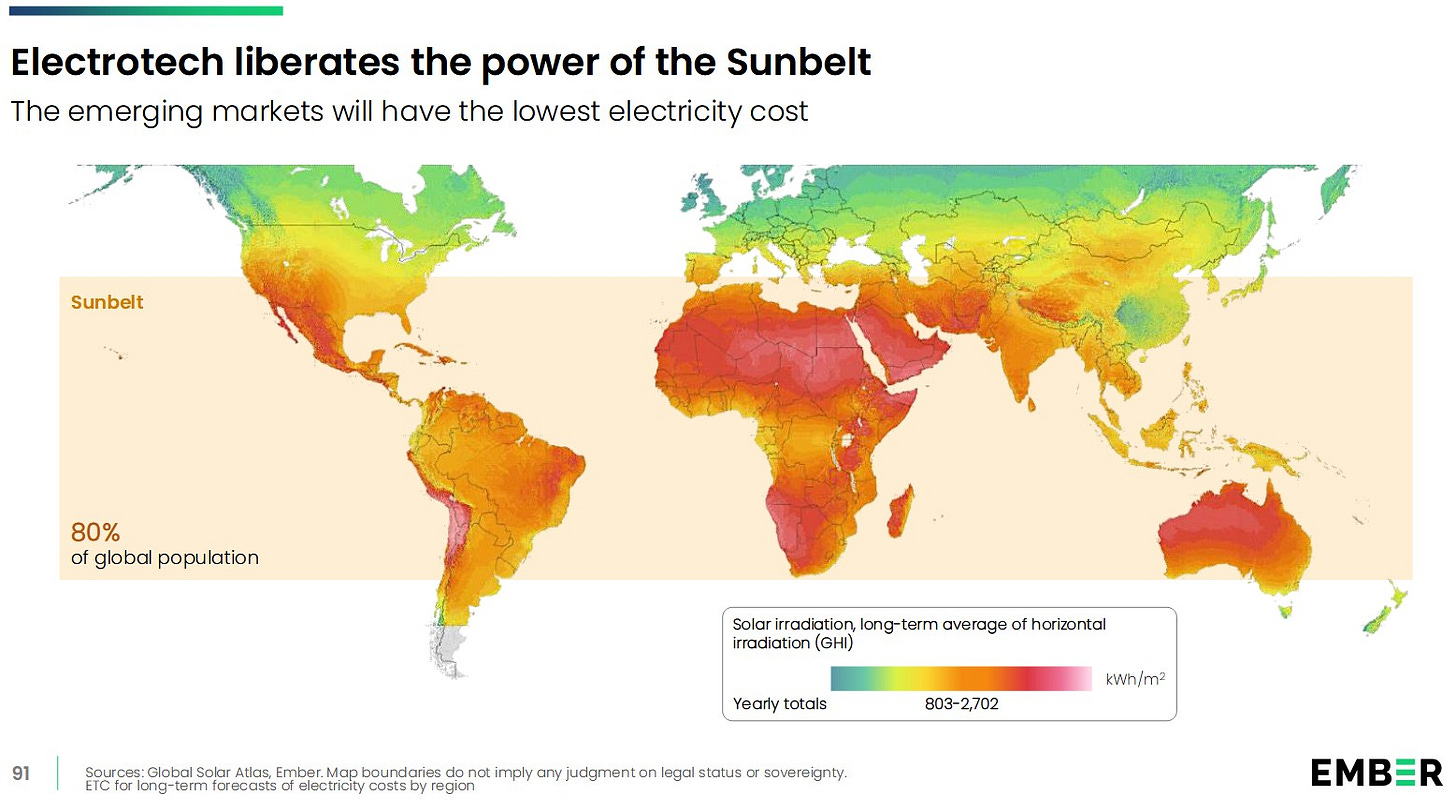
From Ember’s awesome “The Electrotech Revolution” slide deck!
Lassor is saying here that when you put the same, say, 10-megawatt solar panel array in Africa as opposed to the U.S., it’s a 5x bigger win for the climate per dollar spent, because it’s much cheaper to build there, it’s producing more power there because it’s sunnier, and it’s on average displacing much dirtier power there than on a U.S. grid!
So that’s our investment criteria. We are able to influence our solar developers to build solar in more carbon-effective regions, and that’s our model.
Renewables.org was co-founded by myself and Premal Shah. Premal Shah is a well-known social entrepreneur. He was on the founding team of PayPal, and he went on to build Kiva.org. Kiva.org is an anti-poverty microfinance website. Maybe the first crowdfunding website of any kind on the internet,founded all the way back in 2007. And on Kiva, you can lend small amounts of money to impoverished people around the world. Maybe they want to buy a herd of cattle, or they want to keep inventory in their shop or make a home improvement. You can help them do that and they pay you back the principal for over one year. That’s been really effective in evangelizing this form of philanthropic consumer credit, called microfinance.
Premal had the idea of adapting that model to help advance Global South solar development, because the Global South has very rapidly expanding energy needs. And yet finance is a struggle.
You know, in the United States, solar developers do not have a finance bottleneck for the most part.
Yeah, the bottleneck here is permitting.
That’s right. Permitting and interconnection with the transmission lines and so forth.
I’ll get into my background before Renewables.org, but part of that is that I went to a lot of solar developer conferences and developers were kind of hounded by an entourage of financiers from all over the world who wanted to invest in U.S. solar. It’s a great deal and there are all these tax advantages and benefits to investing in U.S. solar. The macro environment made it very attractive for international investors in particular. It was quite difficult to invest in solar because there was so much demand, you had to compete with other investors.
That is not the case in the Global South. Solar development is something that requires concessional capital or a philanthropic approach. In part just because international investors who might do some foreign direct investment, they have plenty of non-sustainable investments that might even have a higher IRR that they would prefer.
So Renewables.org comes in with funding from our network of non-profit investors. We have about a thousand now. And we can fill that gap.
Spectacular. I see why this is so impactful. You’re right at the frontier of solar. You’re right at the point where more money makes a difference.
In developed economies, there’s more than enough money to build solar, but people are held back by other issues. The bottleneck is permitting, interconnection, workforce.
In extremely, extremely poor places like the Central African Republic, there’s not enough of a stable business environment to invest in solar — the bottleneck is like “basic stability.”
You’re finding those points where money actually is the bottleneck, where there’s people who have almost enough money to get solar, and with just a little zero-interest philanthropic loan, they can get over the top and start getting that clean power.
Yeah, that’s right!
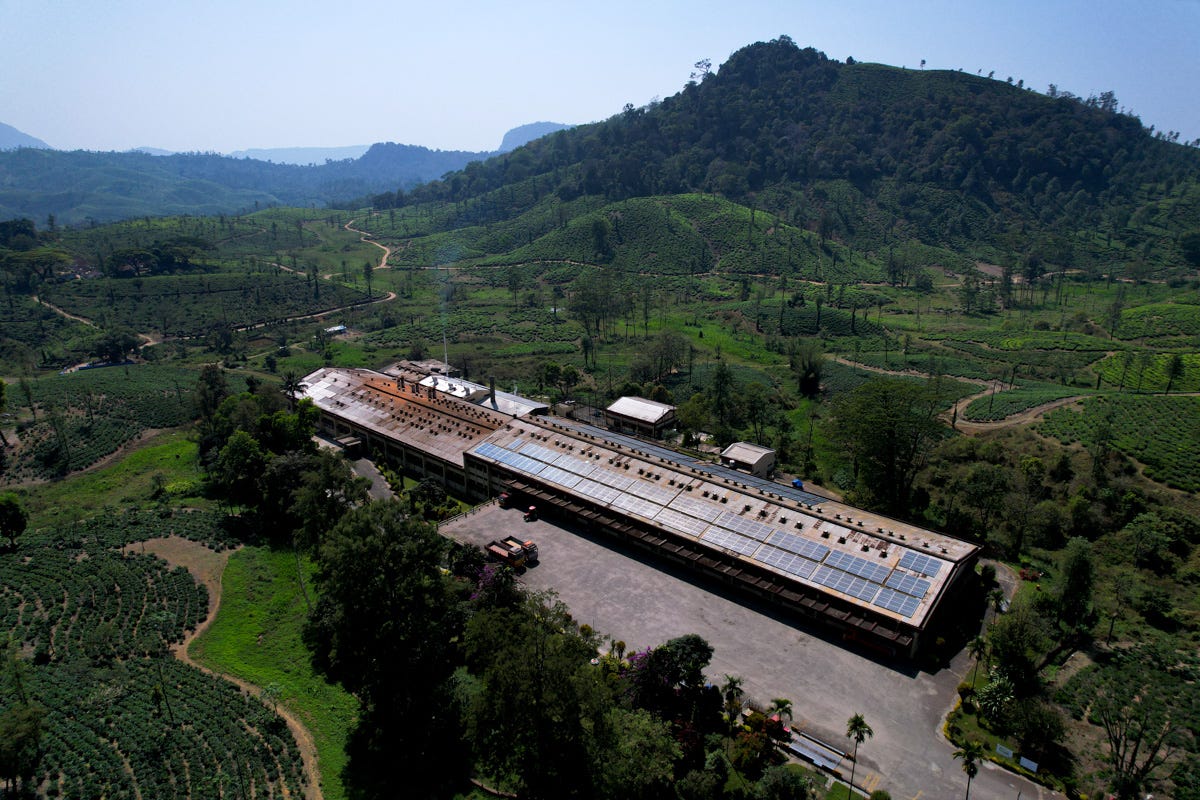
A Renewables.org example project: solar power at a tea plantation in Tamil Nadu, India!
I always say that Renewables.org is an environmental nonprofit. There are secondary and tertiary beneficiaries. There’s Global South economic development, anti-poverty. There’s cleaner air for people who might be breathing in a lot of the fumes from diesel and coal power. And there’s the economic resilience aspect.
We’re not giving solar to off-grid residential, putting solar on top of shanties and huts and such venues that wouldn’t normally have energy. That is also a very fast growing field.
We’re working with private solar developers who are building solar by going to the site manager or the owner of a business that is able to purchase that electricity. Evangelizing solar that way, it’s scalable and makes economic sense.
There are tons of great people doing great work bringing solar at the individual level — households, off-grid solar, neighborhood microgrids. That absolutely needs to happen, that’s helping a lot of people!
But what you’re specifically zeroing in on is the business, commercial, larger-scale level. I’m looking at your map of the people you’ve provided loans to, and it’s like university in Botswana, university in India, tea plantation in India, cooking oil factory in Rwanda.
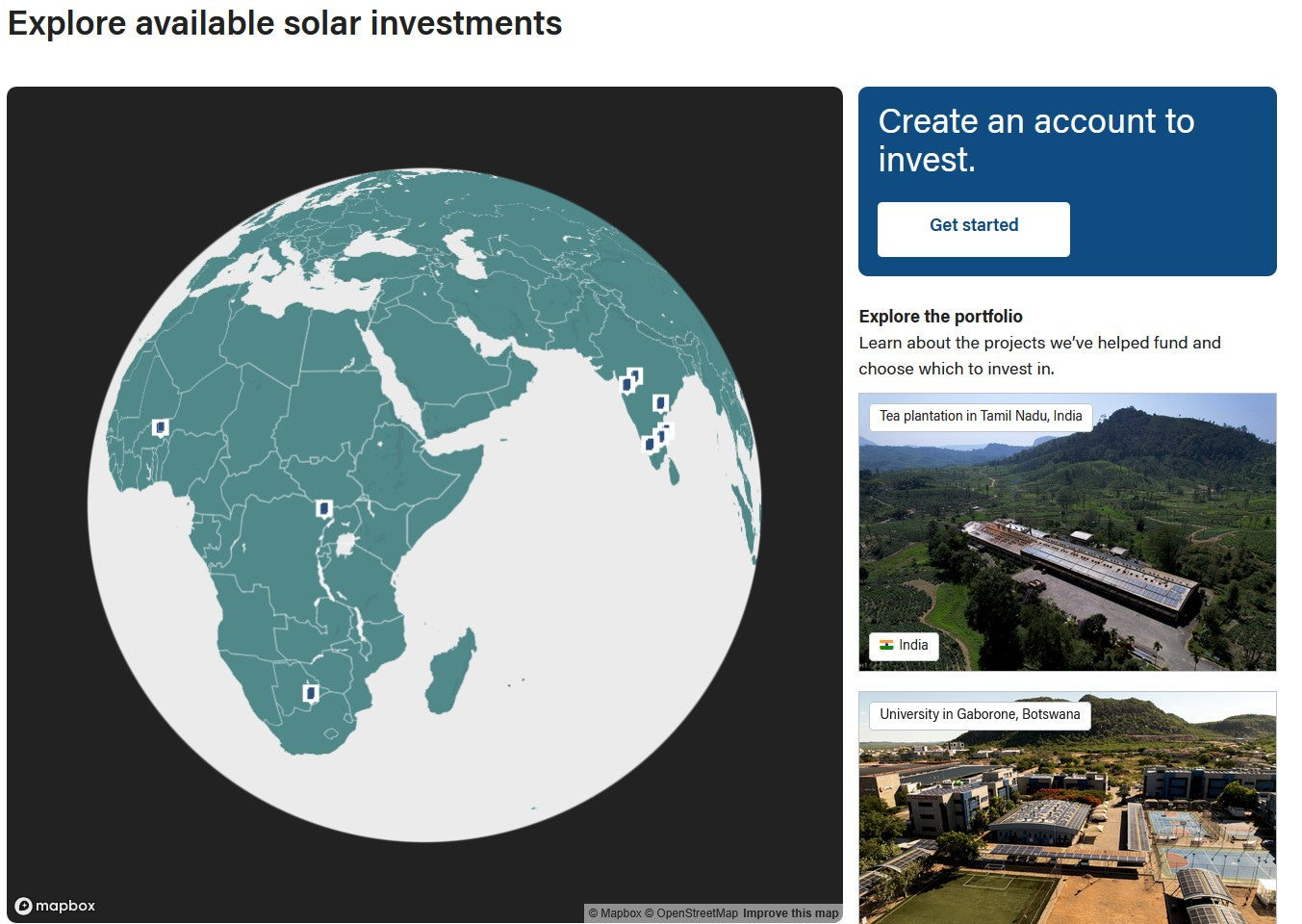
You’re creating these islands of economic prosperity that will help not just one household, but will provide a literal stimulus, the electricity which is a core basis for everything nowadays. That will provide jobs to the region around, and just help accelerate a whole cycle of development.
There was a great article in Substack recently by Ken Opalo, an expert on African development, who was talking about this. He was saying, off-grid solar spreading to individual people’s rooftops is great, but we also badly need more power for businesses in Africa, to drive industrialization and uplift.

Electrifying African firms for growth and development
5 months ago · 60 likes · 4 comments · Ken Opalo
And that’s what you’re doing. You’re providing solar to large-scale businesses that can become clusters of prosperity in these places.
Yeah, and those businesses are choosing to build solar largely because it’s cheaper than buying electricity from the grid!
And that grid might be unreliable. It might be expensive. The prices might fluctuate because depending on political considerations and currency fluctuations. The cost of energy can be quite volatile. So when they build solar it’s usually great for their business! They’re saving money, their energy is more reliable, and it’s more sustainable as well.
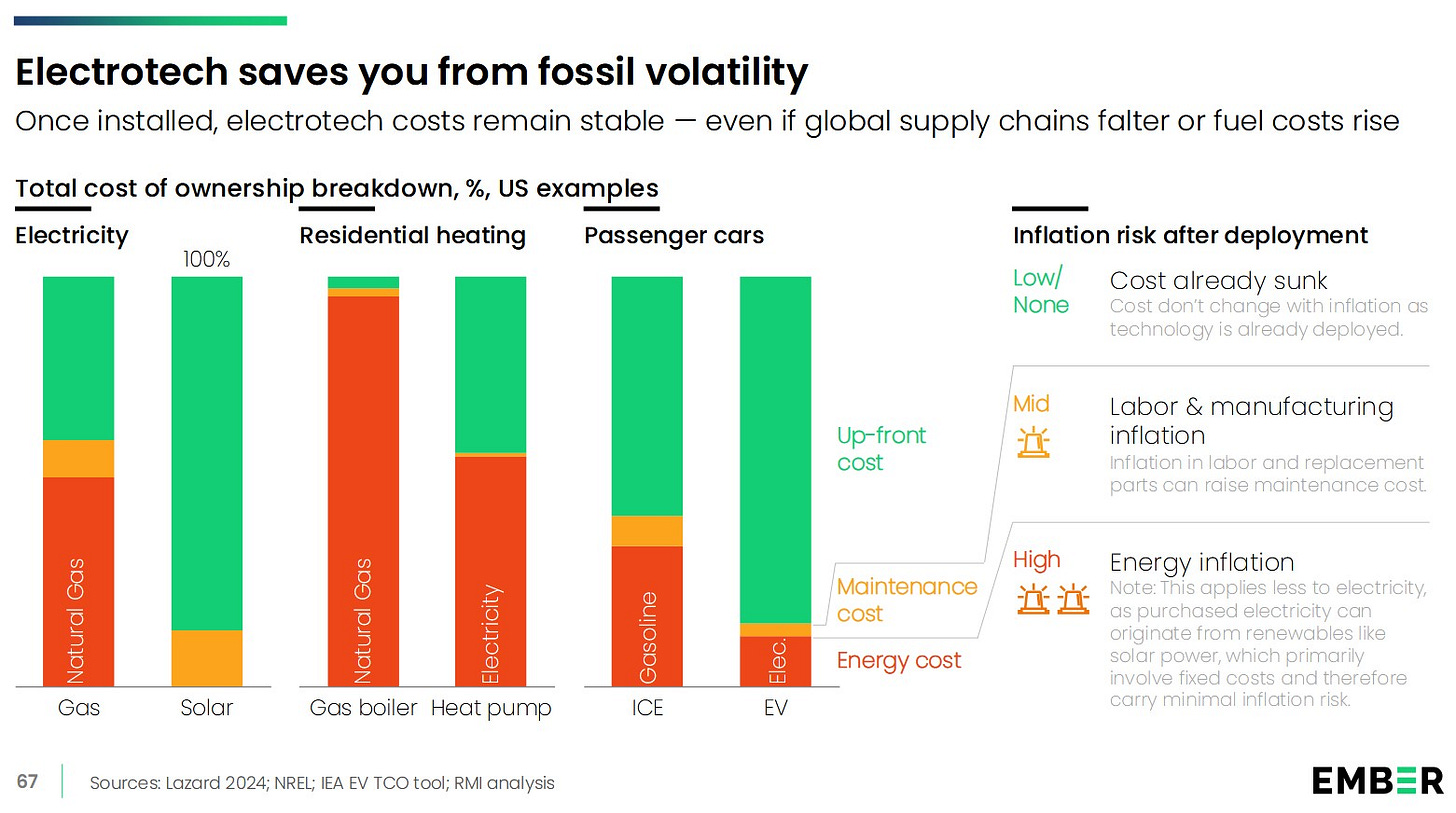
From Ember’s awesome “The Electrotech Revolution” slide deck!
Maybe another kind of mirror to the situation with American solar developers is if you happen to own a commercial facility with a big rooftop, a big warehouse or data center or something like that, in the United States, then you are going to be hounded by marketing information about why you should build solar and all the benefits and all the money you could save and the impact you can have.
Whereas the developers we work with have to go and pitch private businesses on why they should build solar, and they might be the first ones. So they have to do a lot of education to to explain why this is a good idea, why it’s a win-win for everyone
Oh, that’s fascinating.
Kiva.org did a lot of work. They were like the Johnny Appleseed of microfinance. They built all this infrastructure. They still do hundreds of millions of dollars in microloans each year, the microfinance industry has become a $100 billion plus industry, largely due to their help. That’s the type of impact that we would like to have.
Yeah, and you also really neatly avoid some of the traditional pitfalls with microfinance. There’s been a lot of issues. If you lend people money to start a business, it can make them marks for people trying to do multi-level marketing scams, for example.
You’re focusing entirely on a technology that’s proven itself over and over: solar panels. It works. We know it works. It’s going up at the multi-gigawatt scale by the day!
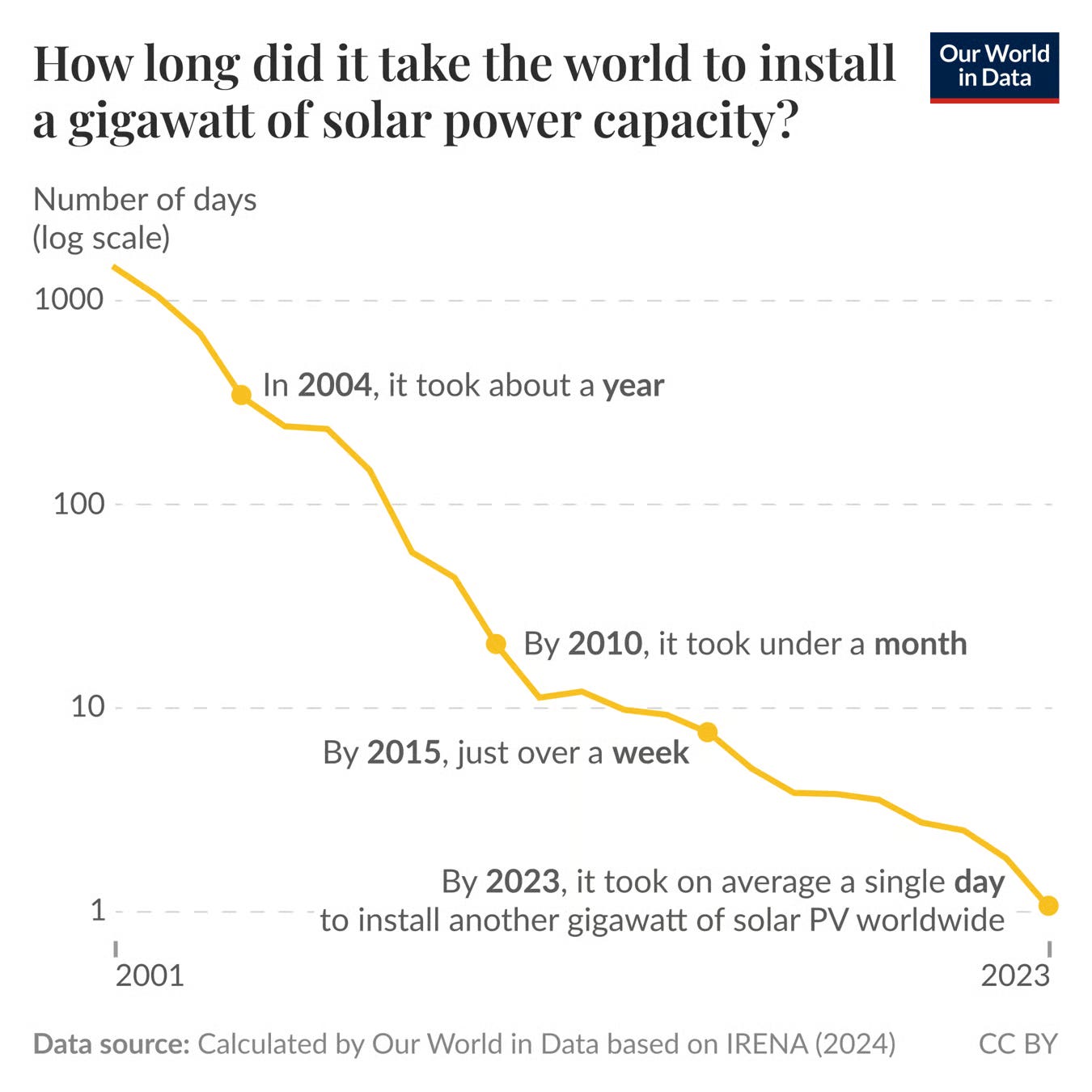
You know that this will continue generating power and give you a return. You’re sort of picking the least risky thing to do microfinance for.
Yeah, for sure. Our counterparties, whether it’s the solar developer or the site manager who they work with, are relatively sophisticated. They’re not vulnerable people. So we don’t have the same liabilities in that sense as Kiva does. And one result of that is that we have a scalable business model where we’re able to charge our developers a concessionary rate of interest, and that goes back into product development and growth.
Whereas the Kiva model, because no one wants to benefit from vulnerable or needy beneficiaries who are their borrowers, Kiva relies entirely on philanthropic capital to pay their operating costs.
So right now we’re still in our pilot stage, but over the long run, I think that really could power some healthy growth.
Fascinating.
So basically, if I’m summarizing your work correctly, you guys offer a zero interest loan to companies that build solar in the Global South. They build solar for a client. Client pays the solar developer, the client being the university or the tea plantation or whatever. The solar developer pays Renewables.org interest on the loan and then pays back the whole loan as they’ve been paid themselves by the client.
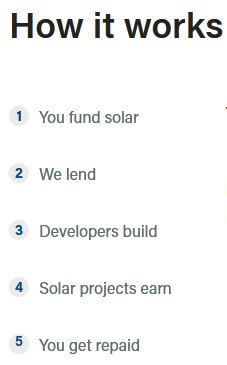
Renewables.org is a non-profit, but makes some money for operating expenses from the interest on the loan. And then the principal of the loan, the non-interest part, goes back to the Global North investor that’s originally sent Renewables.org that money to support solar in the Global South. It’s a very elegant model!
Have you had any interaction so far with governments in the countries you work in? For example, the new president of Botswana, Duma Boko, has been really a big fan of solar power. Has there been anyone reaching out to you?
No. You know, we’re still operating in a small pilot scale.
I would say that it’s very heartening to see global leaders who are passionate about solar and sustainability! But you quite often see a new leader come in the country who wants to change the way that electricity is built, or change the economics of the country.
This is one of the benefits of doing commercial solar: we are behind the meter, meaning that the power purchaser is the only counterparty. We’re not selling electricity to the grid. And so we’re not exposed to political risk or currency fluctuation risk or the volatility and unreliability of the local grid.
It’s really right-sized for that venue relative to utility scale solar onto the grid, which introduces a whole host of other risks. With Renewables.org, there is a small risk that the power purchaser defaults, as in they can’t purchase the electricity anymore. We do some work and the developer does work to mitigate those risks. But you take on that risk and in exchange, you offload the risk of currency fluctuation and other considerations as well.
And it is, like you said, it is a very simple project. You’re sending a loan that enables a developer to put solar panels up on a building, then the developer gets paid back from the people getting the power, who run that building. Then the developer pays you back, then you give back the principal of the loan.
There are often massive economic and political risks to grid-level projects in developing countries, and you’re avoiding them because your final client is just dealing with one entity, the university or the plantation or whatever. You’re not dealing with a zillion local politicians.
Right.
So what are your payback times? If someone invests X money, how much does it take for them to get back all of X?
You’re repaid monthly over five years. So that’s 60 equal monthly repayments.
No matter how much you put in? Like if I put in $60, I get $1 back every month for five years, and if I put in $600, I get $10 back every month for five years, and so on?
Yeah, we keep it super simple. We’ve worked with a developer to find a way for them to kind of meet us halfway at the consumer level. The consumer is giving up their interest, this opportunity cost of locking up some money for five years. So the developer meets them halfway by having a shorter loan duration than they normally would, that they only do with us.
So that’s how we kind of make it work from the consumer level. You lend $25, you get about 40 cents back a month each month for five years, at which point you’re fully repaid.
And each month you can either withdraw your funds via PayPal or you can reinvest them in even more solar. They land into your renewable.org balance on the site, and you can go browsing for different solar projects where you might want your next investment to be done.
Maybe you get $5 or $10 back over a year or two if you only have $25 in there. Or, the minimum investment is $25. 25 times 60 is 1,500. So some people will put in $1,500 and that way they can make a new $25 investment every time they get a monthly repayment.
So for $1,500, you get to literally, not metaphorically, invest in helping a new solar project somewhere in the world every month for five years.
That’s right!
Wow.
So you can kind of keep the money rotating in that way. Yeah, a lot of people really like that concept!
That is spectacular. I didn’t know about this concept where it returns to your account and you can reinvest it. That’s almost a gamification metric! Like, every month people could keep their streak going of investing in some cool new project. That sounds like so much fun.
Yeah, yeah, a lot of people really connect to it that way.
And, you know, you can go into our portfolio of over a dozen solar projects in Rwanda, Botswana, Burkina Faso, India, and you can see like the factories, the tea plantations. We have some amazing photography of some of them. You can also see statistics and how much energy was produced by that solar project last month or last week.
So you get a sense that you’re creating real impact. You’re not just throwing money over the transom the way that you would with a normal either philanthropic donation or impact investment, and then crossing your fingers that something good is coming out of it. You can actually go and check in and see, is this solar project still producing? How much value did I create last month? And so on.
That is just awesome! That is so cool.
Your website notes that repayments are drawn from the renewables fund, not individual projects. All the money you collect goes into one fund. That’s so you have decent cash flow and flexibility, right?
Yeah, at a larger scale, we might want to go and fund individual projects in full.
For the time being, we’re essentially lending money to solar developers who are paying us back out of a portfolio of already operating solar projects.
Basically, they’re not running 15 different funding lines, they’re directly loaning to a solar developer so they can build new projects, then getting paid back from that developer’s revenue from all their existing projects. The website shows complete projects by the solar developer they work with, and your money will help build more like those.
Yeah, I see.
Those projects are creating the revenue that’s allowing us to lend to the developers, so they can build even more.
Yeah, that makes sense. How do you manage the process for expanding to new countries?
Looking at your map, I see that you have a whole bunch of awesome-looking projects in India, which I love.
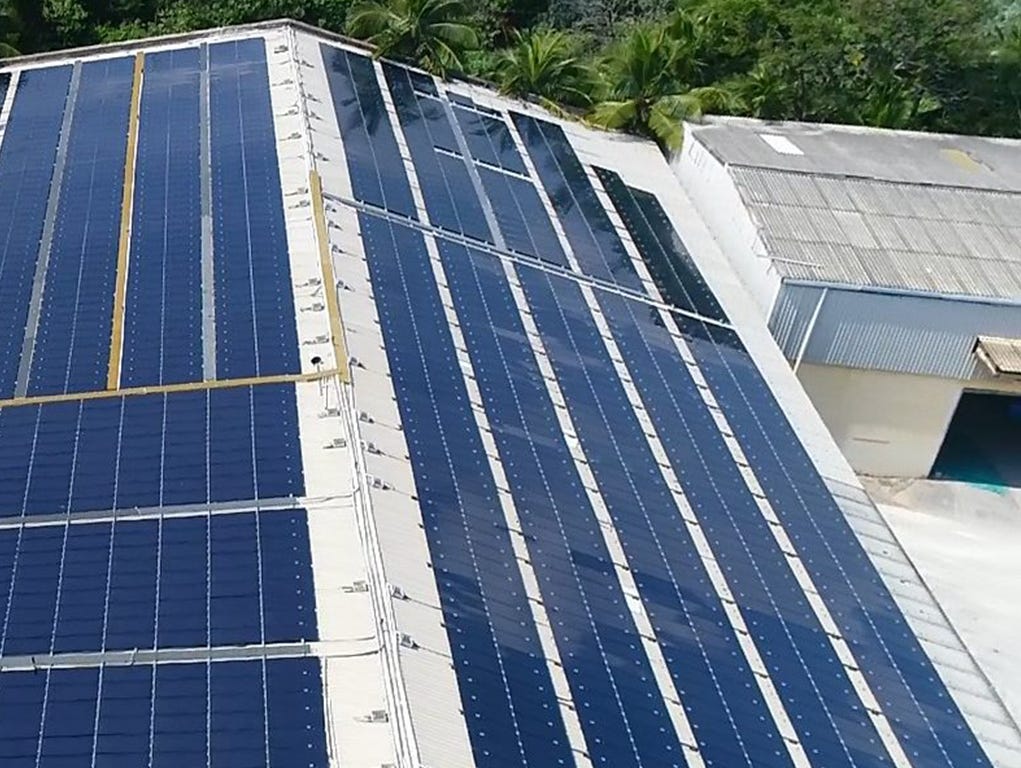
A Renewables.org example project: solar at a chemical plant in Pondicherry, India!
I did a reporting trip around India in 2024 and wrote 10 articles about it. There’s so much potential, so much progress happening there.
I also see that it looks like you’re starting to move into Africa as well. You’ve got stuff in Botswana, Rwanda, and Burkina Faso.
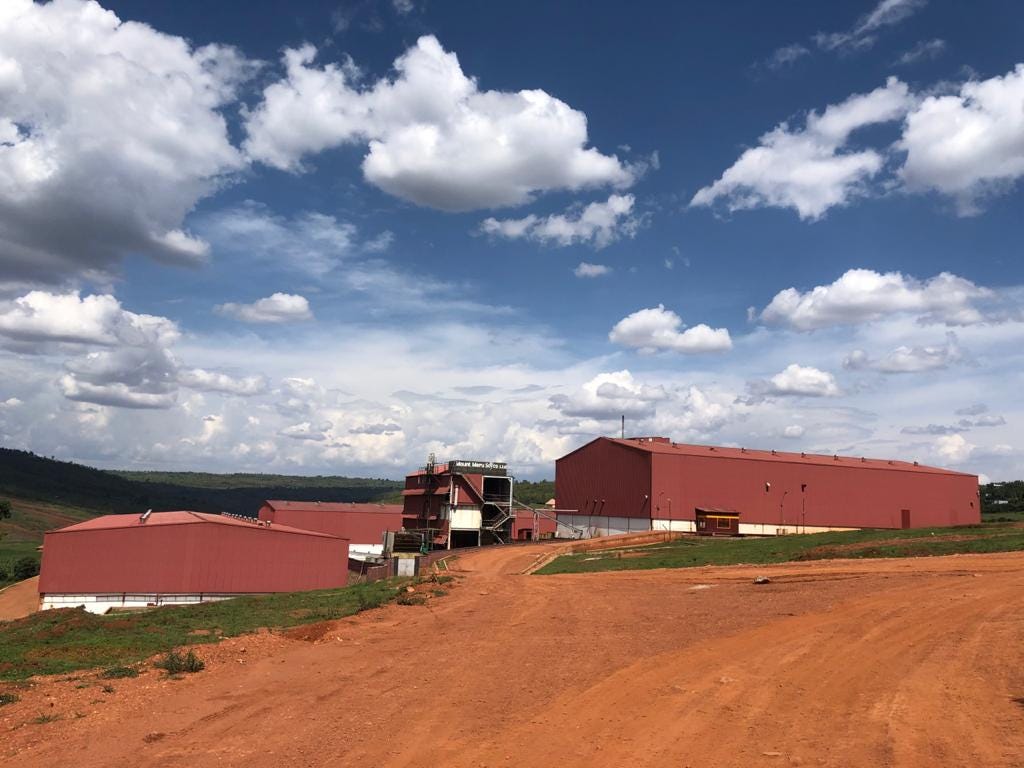
A Renewables.org example project: solar at a cooking oil refinery in Kigali, Rwanda!
How do you choose countries to work in? The world is a big place. Where do you zoom in on?
So we have an investment criteria called the impact multiplier. This is how we kind of try and direct the solar developer to allocate the funds.
And the impact multiplier, I actually described it to you earlier in the call. It’s how we calculated that figure that you create more than five times the carbon emissions reduction impact with Renewables.org than in US solar. We actually have collected the data. How carbon intensive are different power grids in different countries in Africa? How many sunny hours do different locations get? And then the construction costs play a role as well. How much are you paying per installed watt in a solar facility? So those are the criteria.
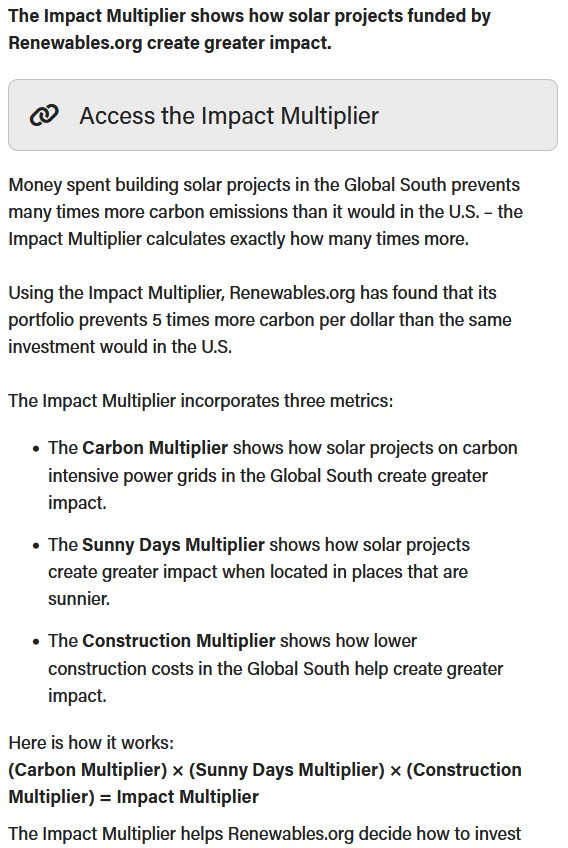
And then, of course, we want to be repaid. We need to make our investors whole again. So there is some consideration of the risk profile of the power off-taker and the country where it’s located.
But after that, we’re really looking into the impact multiplier. And that multiplier document is actually open source. You can go onto our website and click into the actual spreadsheet where we have calculated that. I’ll send you the link right now.
Awesome!
So that’s an FAQ that describes it. If you click in, you’ll get to the Google Sheets document that has all of the data and you can see exactly how we got to that five times the carbon impact, with the impact multiplier. So that’s very fun, exciting. That’s kind of our investment criteria.
To make it more practical, there are some countries that have very sustainable grids. For example Kenya has a lot of geothermal and hydropower. So maybe we would not prioritize Kenya because you wouldn’t be making as much of a carbon emissions difference. You might not even be doing as well as U.S. solar investing, because the grid is so sustainable there. But then Rwanda and Burkina Faso are quite coal and diesel-based, and so that’s where we would want to focus.
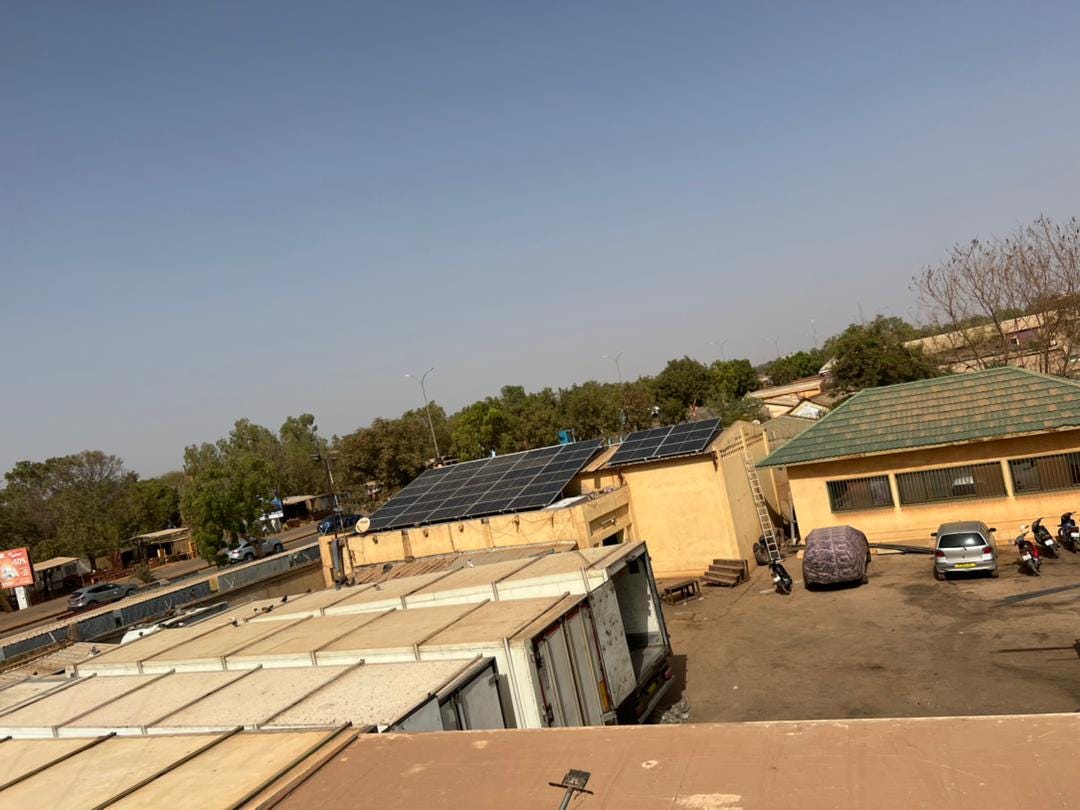
A Renewables.org example project: solar at a regional fish depot in Ouagadougou, Burkina Faso!
You currently have, it looks like, 15 [example] projects in four countries. What are your plans for future expansion?
For the time being, we are working with just one solar developer, called Distributed Energy, who is the developer for all of those projects.
We’ll probably continue to work with them until we’re raising about $100,000 a month in new investment, at which point we will be able to have enough leverage and have enough funds to be able to attract and vet out additional solar developers. That’s when we would start to think in a more concerted way about which countries we want to go into next.
But really, again, it’s the impact multiplier. Once once we’re satisfied that a power off-taker is credit worthy, that they’re likely to keep for five years, then the impact multiplier is really the key thing.
And we would go anywhere. We would go to Latin America or Asia to pursue the highest carbon impact per dollar invested projects that we can find. But for the time being, the vast majority of those are going to be in India and Africa because of how dependent they are on coal and other non-renewable sources of energy.
All right. That makes sense.
So you guys are really new, right? You were founded when?
We started in 2024. We’re brand new. We have about a thousand users. I would say we’re still in a pilot stage. I would love to have an investment committee and be more institutionalized. I think we’ll get there eventually. But for the time being, we’re keeping things really light while we learn how to scale and plan our future.
So yeah, we’ve been operating a bit longer than a year. We have about half a million dollars in investor funds raised and about 1,000 investors. The average investor has about $350. That goes from plenty of people who put in the minimum $25 to some well-off investors who put in $30,000 or $40,000 as well. It takes all kinds.
That’s awesome!
We also have two other products I want to tell you about, two other kind of formats.
One of them is, we have a subscription. Plenty of our investors put in a few hundred or a thousand dollars a month. Some of them put in $25 a month in recurring monthly investments. And that’s an important source of new funds on Renewables.org.
Renewables.org Auto Invest Subscription
Then we also have a tax deductible donor edition. Maybe you don’t want to get those repayments, you would prefer to take a tax deduction this year. You get the exact same experience as a normal nonprofit investor, only you can never withdraw those funds, you just have to reinvest them, year after year. We have a growing cohort of donors who use that. They’re sometimes people who just want the tax deduction. Sometimes they’re wealthy donors and they make a distribution from a trust that they have.
One thing I’m really excited about that’s opened up for us is employer matching. So Microsoft, JP Morgan, Google, many other large tech and finance companies will match their employees’ donation to different nonprofits. We have several dozen investors who came on through that channel as well.
Oh, that is awesome.
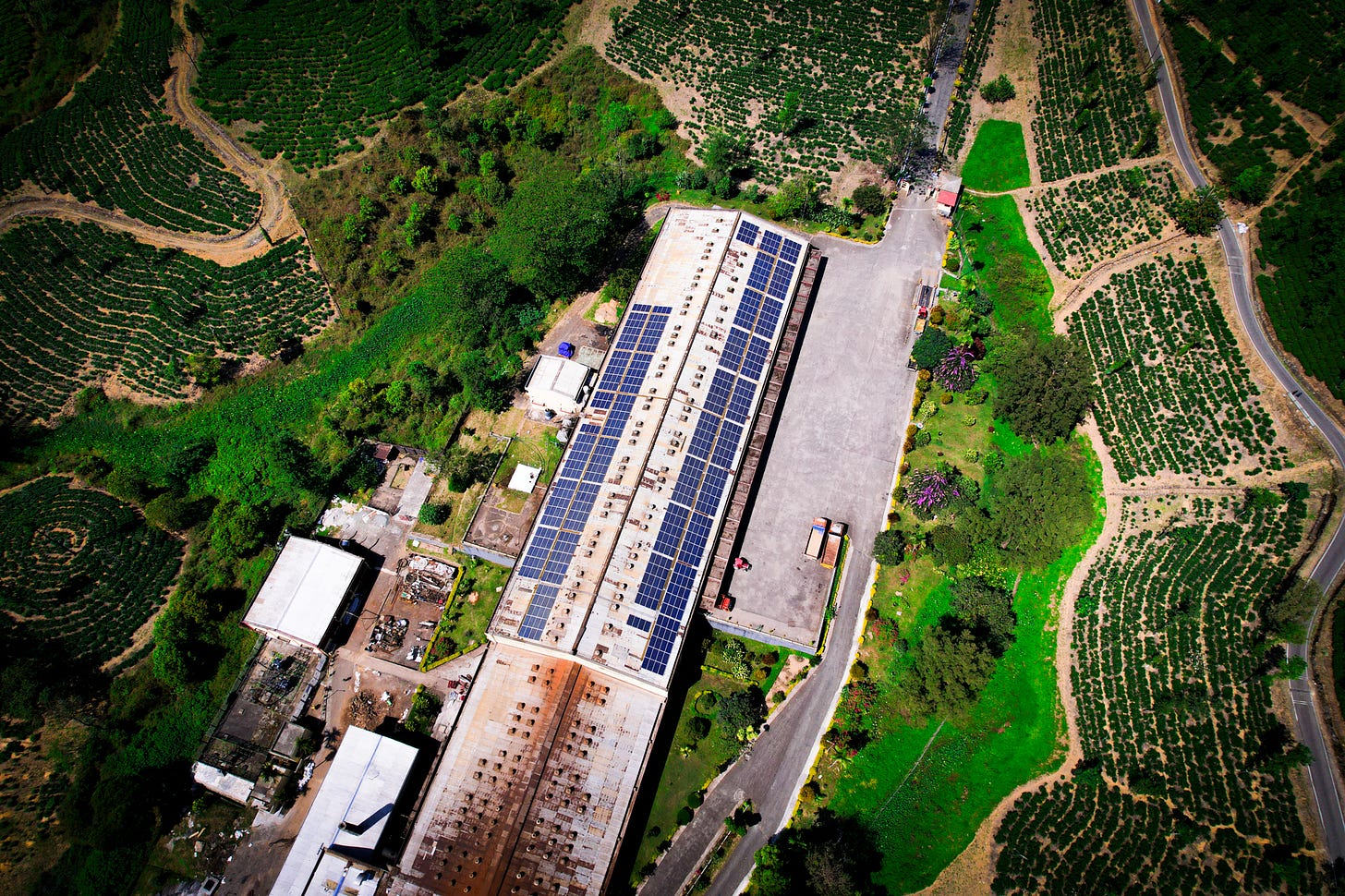
Another view of solar at a tea plantation in Tamil Nadu, India.
So to be clear on the tax deductibility thing, if you want to make your Renewables.org investment totally tax deductible as charity, you can just say that you’re not ever going to reclaim your funds, but you can keep reinvesting it as it gets returned to you within the Renewables.org platform.
But if you fully withdraw your money, that’s not tax deductible.
Yeah, if you’re using the donor edition, you can never withdraw the funds. So that’s considered a donation to Renewables.org. So we put that money into the renewables fund and you can keep on managing it with your account, but you can never withdraw that.
All right, great to know.
So who is this available for right now?
Anyone who has a PayPal account can use it.
Great!
Other people can reach out to us if they don’t have a PayPal account or if they prefer to use a bank transfer for some reason. Anyone who wants to make more than a $2,000 donation, we ask to use a bank transfer in order to avoid PayPal fees.
But yeah, to do the self-serve product, just use PayPal, and you can do that from anywhere in the world.
This is really great, and I’m really excited to hear about all this from you. I’ve asked you a bunch of questions. Is there anything else you want to share?
I can tell you a little bit about my background and how that plays into this. So my background is in product design. What drew me to this project is that I saw how much homeowners with residential rooftop solar love to check in on their solar productivity through these apps that they get when they install solar panels. You can see that nice bell curve form as the sun comes up and it peters out as it goes down. You can see all the energy that you produce, the money you save, the impacts you created.
But there’s no real reason to look at it. There’s no call to action. There’s nothing you can do with that information other than feel good about creating an impact and saving money. So I thought, what if you could extend that experience and make it a more enriching and rewarding experience? Maybe eventually make it social and gamified in different ways. But then invite people to make an even larger investment and have a greater impact, since they’re already there spending time. So that’s kind of the origin of Renewables.org’s design approach, and an important part of my vision as well.
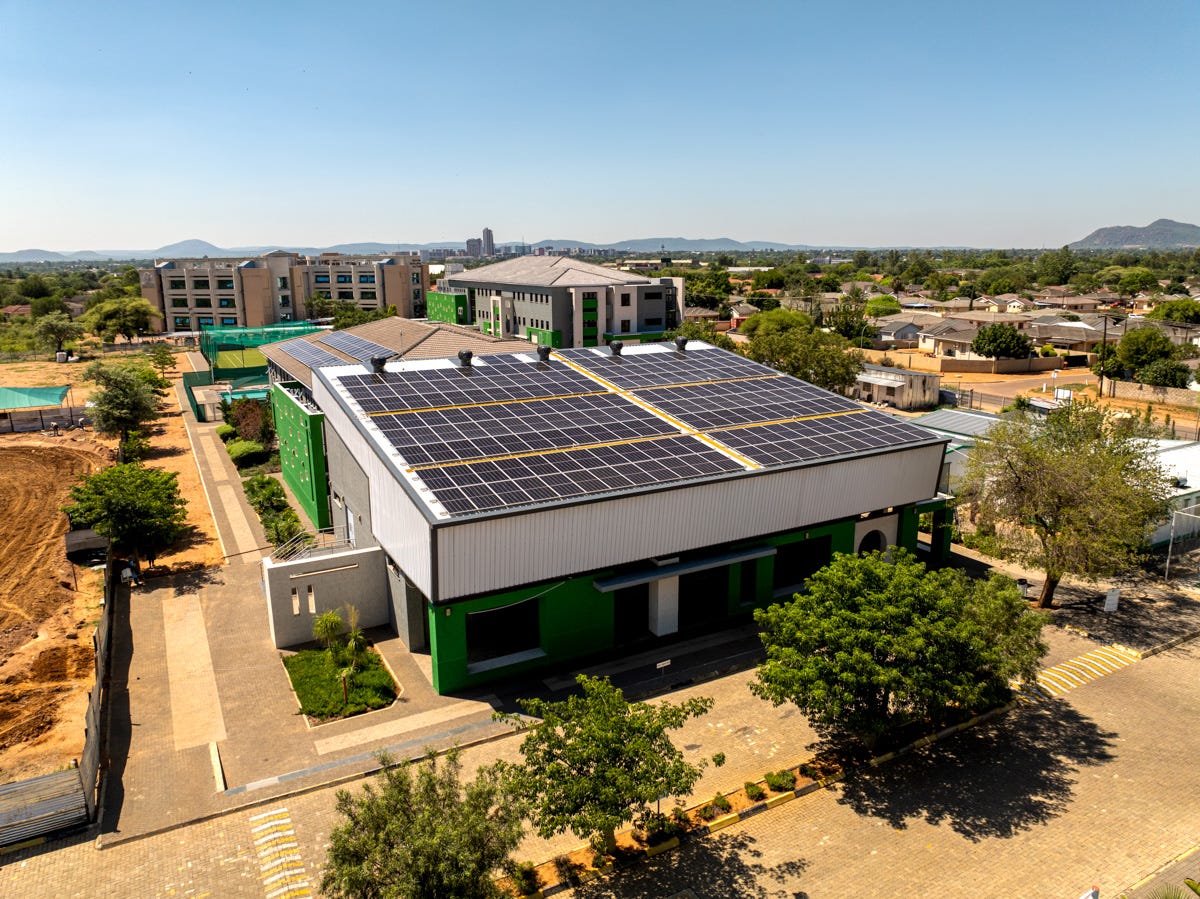
Another view of solar at a university in Gaborone, Botswana.
One other thing I love about this is that there seems to be no risk that some local business or non-profit or university in a developing country is left in debt. You’re lending money to a well-established solar developer company, DE Energy, that then pays you back. And they’re just in a standard sort of product/vendor relationship with the people in those countries.
The traditional hurdle of microfinance has been all the risks, all the potential bad stuff that might happen on the ground that might cause problems. And you seem to be avoiding that or minimizing that very neatly. You seem to be in a very straightforward, low risk sort of structure.
Yeah. There are some risks, but the recourse the developer might take if there’s a non-payment from the customer is that they’ll turn off the inverter so that that customer won’t get electricity anymore. So they’re not lending the customer money. The customer is committed to purchase all the electricity that is produced. You definitely sidestep many of the risks that come in when you are offering consumer credit to vulnerable individuals, for sure.
Is there anything you want to add?
There is a lot of disheartening news coming out of the policy front on the sustainable energy transition.
In the U.S, yeah.
And yet there are all these amazing technologies that are ready to be deployed, that can really change the course of history and prevent the worst impacts of climate change. So until the policy and political world can get its act together and understand the urgency of these issues, there are actions that individuals can take. I think that Renewables.org is one of the best ones because we do so much work ensuring that every dollar goes as far as possible from a carbon impact perspective.
This is, pardon me, f**king spectacular. This is just amazing. This is exactly the sort of thing that needs to exist!
Bill McKibben was writing about the need for more channels like this just a few weeks ago, that we need more ways to connect capital in the Global North to speed the epic solar buildouts in the Global South.
I’m super pumped about this, honestly. This is exactly the kind of thing that i feel really needs to exist, and that I would love to help promote.
Thank you! I really appreciate that. I really admire your passion for this, and I look forward to the article and opportunities to work together in the future!
This is awesome. You are really bringing this miracle that so many people have written so much about.
These sheets of glass, no moving parts, no pollution, that you can point at our big nuclear fusion reactor in the sky, our local star, and generate clean power to do stuff on Earth. We’re going from hunting for fossil fuels to farming the Sun!
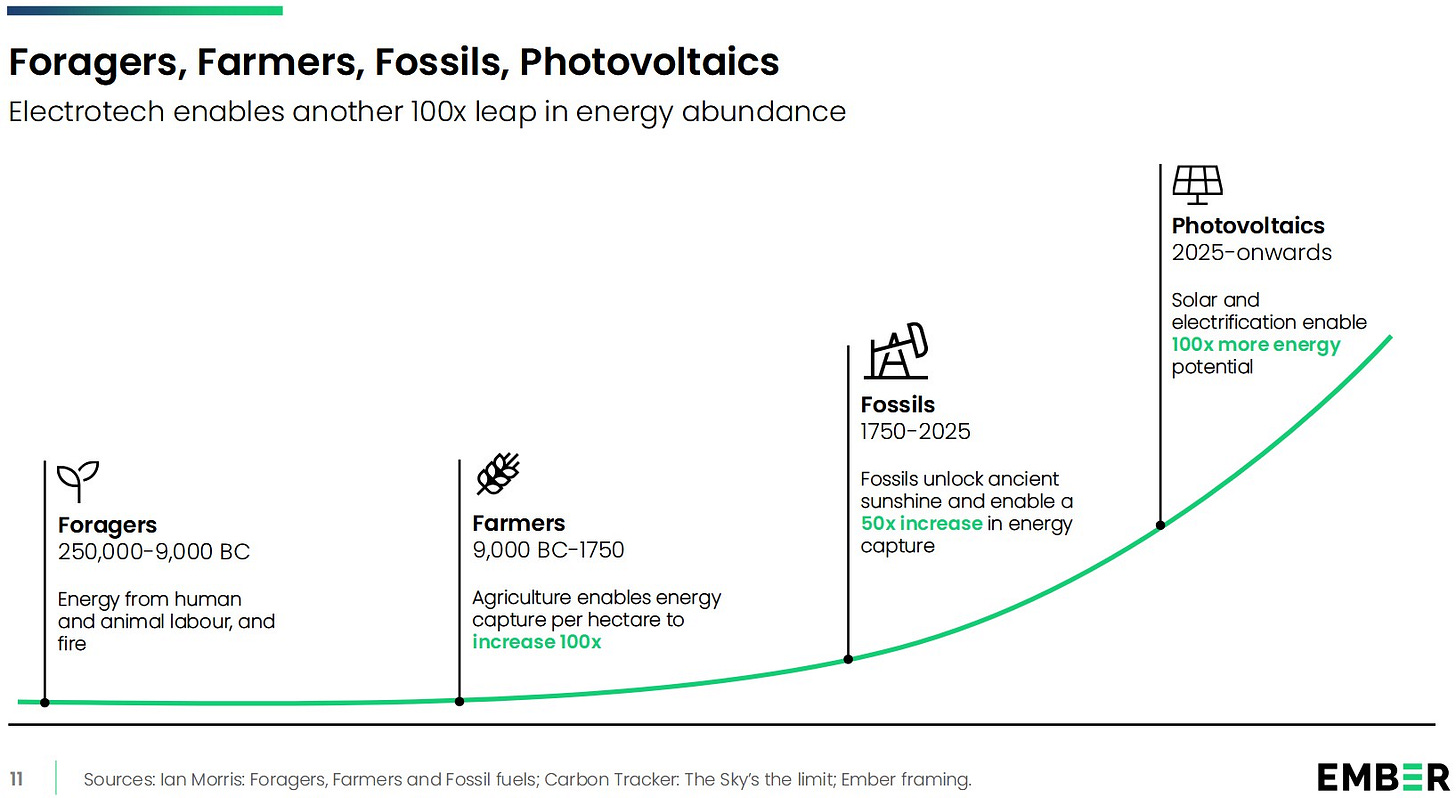
From Ember’s incredible “The Electrotech Revolution” slide deck.
And you’re helping people who care about this progress, this revolution, but are living in places where it’s a political football and tied up in red tape, to help literally buy those panels for people living in impoverished parts of the world, where that is a life-changing gift of clean power.
That is just an amazingly noble thing to be doing, and I am super super psyched to be sharing your story.
Thank you so much, Sam! I really do appreciate it.
I am honored to be an “industry press” for emerging new ideas in the climate and clean energy field. That’s what I want to do! I want to share these stories and help inspire people and help spread the world of good work like yours.